Commercial bathrooms experience very different operating conditions from bathrooms in an average home. Offices, restaurants, hotels, schools, healthcare facilities and public buildings can have considerably higher usage, making drainage reliability an important part of building management.
When a new commercial bathroom is added to an existing property, conventional drainage may not always be straightforward. The available soil pipe could be too far away, the new bathroom may be below the sewer level, or major structural work may not be desirable.
A heavy-duty macerator can provide an alternative for suitable applications.
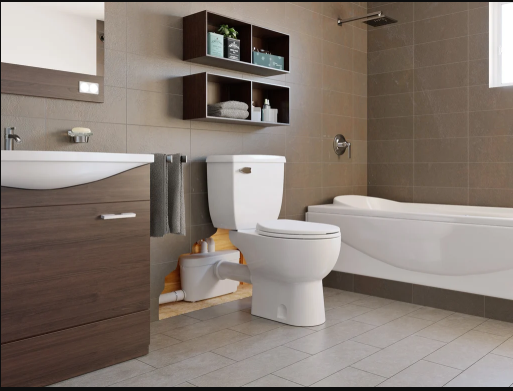
SFA’s Sanibest Pro macerator pump is designed for heavy-use public and commercial environments. It can handle wastewater from a WC, basin, bidet and shower and is designed to pump wastewater up to 7 metres vertically or up to 110 metres horizontally, depending on the installation conditions.
One of the important considerations in a commercial installation is frequency of use. Equipment used by several people throughout the day needs to be selected with the intended duty cycle in mind. A system designed for occasional residential use may not be appropriate for a busy commercial washroom.
The layout of the building also matters. A restaurant may need an additional staff washroom, a hotel may require facilities in a renovated section, or an office may want to add a bathroom in an area where traditional drainage is difficult to access.
A compact macerator can potentially reduce the amount of structural modification required because wastewater can be pumped through smaller discharge pipework toward the existing drainage system.
However, the installation should be designed professionally. The expected wastewater load, fixture combination, vertical lift, horizontal distance and pipe routing all need to be considered. The product should also be used only within its specified application.
Maintenance planning is equally important for commercial properties. Access to the pump should be considered during the design stage so that inspection and servicing can be performed without unnecessarily disrupting business operations.
Hygiene and responsible use should also be considered. Commercial users should be instructed not to dispose of unsuitable materials through toilets or drainage fixtures. Preventing inappropriate items from entering the system can help reduce the risk of blockages.
The benefit of a heavy-duty macerator is therefore about more than simply moving wastewater. It can give building owners and designers additional flexibility when adding sanitary facilities to existing spaces.
For example, a commercial property undergoing renovation may not have the option of installing a new conventional gravity drainage line without extensive construction. A pumping system can be evaluated as part of an alternative drainage strategy.
SFA’s Sanibest Pro is one option for heavy-use bathroom applications, particularly where a WC needs to be combined with other bathroom fixtures.
As with any wastewater equipment, the final product choice should be based on the actual project conditions rather than simply the maximum published pumping distance. A properly designed system, correct installation and appropriate maintenance all contribute to dependable commercial drainage.