The Best Rooms for Hand Knotted Wool Rugs Are the Ones That Get Used the Most

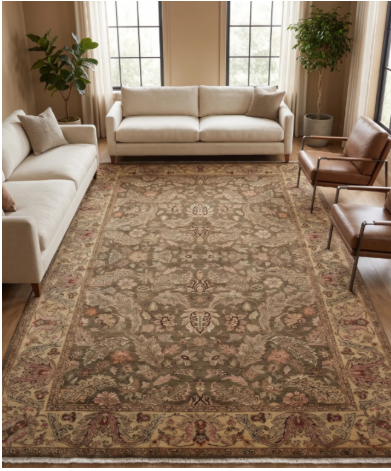
A room does not become important because it is the largest in the house. It becomes important because life keeps returning to it. The living room where the family gathers after dinner, the bedroom where someone reads before sleeping, or the informal sitting area that accommodates guests on an ordinary Sunday often has more daily significance than a carefully furnished room reserved for special occasions.
This is where hand knotted wool rugs deserve a more considered place. Their appeal is not limited to the visual character they bring to an interior. Wool pile, traditional knotting and the design of the rug can make it a practical furnishing for spaces that see regular use. The decision, however, should account for the room’s actual routine, the rug’s construction and the demands of the household.
The Living Room Is Not A Showroom. It Is A Working Part Of The Home.
In many Indian homes, the living room has several occupations. It may be a formal reception area in the afternoon, a television room in the evening, and an extended dining space when relatives visit. In a compact Delhi or Pune apartment, the same room might also accommodate a child’s playtime or a work-from-home break.
A handmade rug in this setting has to relate to movement, not merely furniture placement. It should sit comfortably within the seating arrangement, leave enough room for people to walk around it and avoid becoming an obstacle near frequently used doors or passageways.
A hand knotted rug can give the seating area a defined visual centre without requiring a separate room or additional furniture. Its pattern can also help connect a sofa, occasional chairs and a coffee table that might otherwise look like unrelated pieces.
The practical detail matters just as much. Chairs that are repeatedly pulled across a rug can stress its edges and pile. Heavy furniture can leave indentations if its weight is concentrated on a few points. It is recommended to lift furniture rather than dragging it across a carpet, and periodically reposition furniture to reduce permanent impressions.
A Bedroom Rug Should Respond To The First And Last Steps Of The Day
Bedrooms are often overlooked when people consider where a substantial rug belongs. Yet the space beside a bed is among the most frequently occupied parts of a bedroom. It is where people stand while dressing, sit to put on footwear, and begin or end their day.
In a Jaipur home during winter, a wool rug beside the bed can make stepping onto a cold stone or marble floor more comfortable. In a Bengaluru apartment, the same placement may be appreciated for its tactile quality rather than seasonal warmth.
The important distinction is between a rug that fits the room and one that interrupts its circulation. An area rug placed too close to a wardrobe can catch under doors or make access awkward. One that extends beneath the bed should be positioned with enough clearance for the bed to remain stable and for the rug’s edges to lie flat.
A bedroom also offers more control over exposure to food spills and outdoor dirt than a busy entrance or dining area. That does not make it maintenance-free. Dust, hair, and concealed insect activity still require attention, particularly beneath beds and along edges.
The Family Room Has A Different Relationship With The Floor
Not every Indian home has a separate family room. Where one exists, it often has a more relaxed relationship with furniture. People may sit on the floor, children may spread out books or toys, and family members may use the same area for conversation, prayer-related preparation,s or watching television.
This is a different design requirement from a formal drawing room. A rug needs to offer enough usable surface for the activities that happen on it. Its placement should also account for low tables, floor cushions, and the clearance needed to move around them.
The construction of a hand knotted wool rug becomes relevant here. A knotted pile is formed by tying yarn around the foundation of the rug, creating individual pile elements rather than a printed surface. However, the phrase hand knotted does not automatically establish how well a rug will perform under every kind of use. Fibre quality, pile height, knotting, foundation, finishing and overall construction all contribute to its behaviour.
Dining Spaces Demand A More Selective Decision
A dining room may be one of the most regularly used spaces in a household, but that does not automatically make it the best location for a valuable wool rug.
Consider a family that eats together every evening, serves tea in the dining area, and hosts weekend lunches. Food crumbs, oil splashes, and chair movement become recurring conditions rather than occasional accidents. A rug for dining table should also extend far enough for chairs to remain on its surface when pulled back. Otherwise, chair legs repeatedly catch its edges.
For a household that prefers a rug in this area, a lower-pile construction and a pattern that does not make every small mark conspicuous may be more practical than a deep, highly textured surface. Spills should be addressed promptly, and cleaning should follow guidance suited to the rug’s dyes and construction.
The International Wool Textile Organisation’s wool carpet care guide recommends adapting maintenance to traffic patterns, construction and exposure to soiling. That is a more useful starting point than assuming all wool rugs need the same cleaning routine.
The Most Frequently Used Room Is Not Always The Safest Place For A Rug
There is a difference between a room that sees regular activity and one that exposes a rug to avoidable damage. An entrance with grit tracked in from outside, a sunlit patch beside a west-facing window, or a damp corner with limited ventilation can place additional demands on a textile.
Wool is a natural fibre, not an invulnerable one. Dust embedded in the pile can contribute to abrasion. Direct and prolonged light exposure can fade dyes and weaken fibres. Wool is also susceptible to clothes moth and carpet beetle larvae, particularly where dust and undisturbed areas allow pests to go unnoticed.
For Indian households, this makes routine maintenance especially relevant. Keep the rug clean beneath furniture, vacuum it regularly using a suitable setting, attend to spills without aggressive scrubbing, and avoid leaving it damp after cleaning. In homes with strong afternoon sunlight, curtains or blinds can reduce prolonged direct exposure. A suitable handmade rug pad can also help keep the rug stable, provided its material is compatible with the floor and rug backing.
Choose The Room By Its Routine, Then Choose The Rug
Before deciding where a hand knotted wool rug belongs, consider a few questions:
- Who uses the room most often? A family lounge used throughout the day has different demands from a formal sitting room used occasionally.
- What happens on the floor? Floor seating, children’s play, and frequent chair movement call for different pile and placement considerations.
- Where does dirt enter? An area rug immediately beside an external entrance may need more frequent cleaning than one in a bedroom.
- How much direct sunlight reaches it? Window orientation and the duration of exposure matter when choosing placement.
- Can the rug be maintained properly? Access for vacuuming, inspection, and occasional repositioning should be part of the decision.
A suitable modern rug should not have to wait for a special occasion to justify its place. It can belong in the room where conversations run late, where family members naturally gather and where the floor is part of everyday living. The point is not to put a valuable textile wherever footfall is highest. It is to give it a setting where its material, construction, and design can be appreciated through regular use, with the care that ownership requires.