When a roof starts leaking or shingles show obvious wear, most homeowners face the same question: repair the damaged section or replace the entire roof? The “30% rule” is frequently referenced in these discussions, but it is a guideline, not a code requirement or insurance standard. The appropriate course of action depends on the roof’s age, the extent of damage, and whether ongoing repairs are beginning to cost more than they are worth. Scheduling an inspection before the next period of severe weather puts you in a better position to plan ahead.
What Does the 30% Rule Mean?
The 30% rule is an approximate benchmark that contractors sometimes use when weighing repair costs against replacement. The figure is not derived from a building code or manufacturer specification; it emerged as a practical rule of thumb within the roofing trade, reflecting the point at which repair costs begin to approach the diminishing-returns territory of a full replacement. If the repair estimate approaches 30% of the cost of a new roof, and other areas of the roof are also showing wear, replacement begins to make more financial sense. That said, it is not a strict cutoff. A small repair can still be urgent if water is penetrating the decking, and a larger isolated repair may be entirely reasonable on a roof that is only a few years old.
Rather than basing the decision on one damaged area, ask a qualified roofer in Iowa City, IA, to evaluate the entire roofing system.
When a Roof Patch May Be Enough
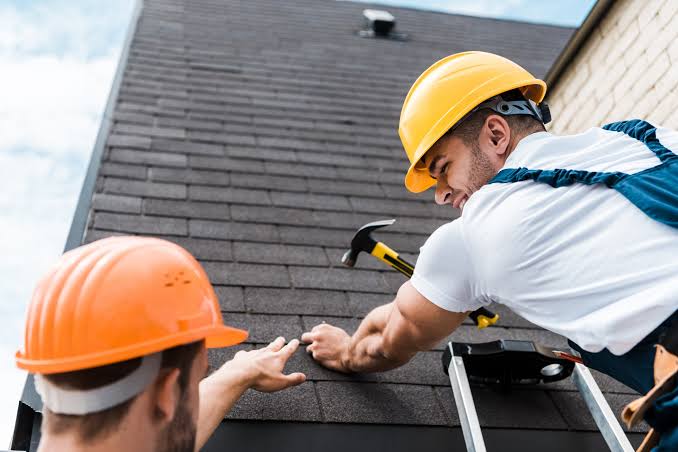
Targeted repairs perform well when the damage is contained and the surrounding materials remain in good condition. A few missing or cracked shingles, minor flashing issues, or storm damage confined to one section do not automatically warrant a new roof. Completing these repairs promptly also prevents moisture from migrating into insulation, ceilings, and framing.
Roof age is also a factor. Most asphalt shingle roofs carry an expected service life of 20 to 30 years depending on the product and installation quality, so a roof in its first decade with dry, structurally sound decking is generally a strong candidate for repair rather than replacement. Ensure that the replacement shingles closely match the existing ones and that the repair addresses the root cause rather than merely covering visible damage. Keep in mind that discontinued shingle lines can make a patch visibly mismatched, which is worth raising with your contractor before work begins.
Signs Replacement May Be the Better Choice
Replacement begins to make more sense when damage is widespread across the roof, shingles are curling or losing granules on multiple slopes, leaks recur after repairs, or the roof is approaching the end of its expected service life. Soft or rotting decking, visible sagging, and moisture appearing in the attic indicate that a deeper issue may be present beneath the surface.
At that point, repeatedly patching the same areas adds cost without resolving the underlying problem. When storm damage is involved and the repair estimate lands near the 30% threshold, it is also worth contacting your insurer before committing to either path, as a qualifying claim may shift the decision entirely. A thorough inspection can determine whether a broader repair or full replacement is the appropriate course of action. A reputable roofer in Iowa City, IA, should walk you through the inspection findings, clearly present your options, and be transparent about what requires immediate attention versus what can be deferred.
Consider Iowa City’s Weather and Total Cost
Iowa City roofs endure significant stress year-round. Freeze-thaw cycles, heavy rain, snow loads, high winds, and hail all place stress on shingles, flashing, and roof valleys over time. Even when damage appears minor from the ground, a proper inspection should assess nearby shingles, roof penetrations, attic ventilation, and any evidence of trapped moisture.
Obtain full pricing for both options, including labor, materials, disposal, and the realistic likelihood of additional repairs in the future. If the damage may be covered by your homeowners insurance, review your policy and contact your insurer before any work begins. Coverage varies depending on the cause of damage and your specific policy terms, so do not assume replacement will be covered.
Final Thoughts
The 30% rule is a useful starting point, but it should not be the sole factor driving the decision. Roof age, damage patterns, decking condition, recurring leaks, and long-term repair costs all carry significant weight. An experienced roofer in Iowa City, IA, can review all of those factors and provide a straightforward assessment based on the roof’s actual condition. Addressing problems early almost always costs less than waiting until a minor issue escalates into a major repair.